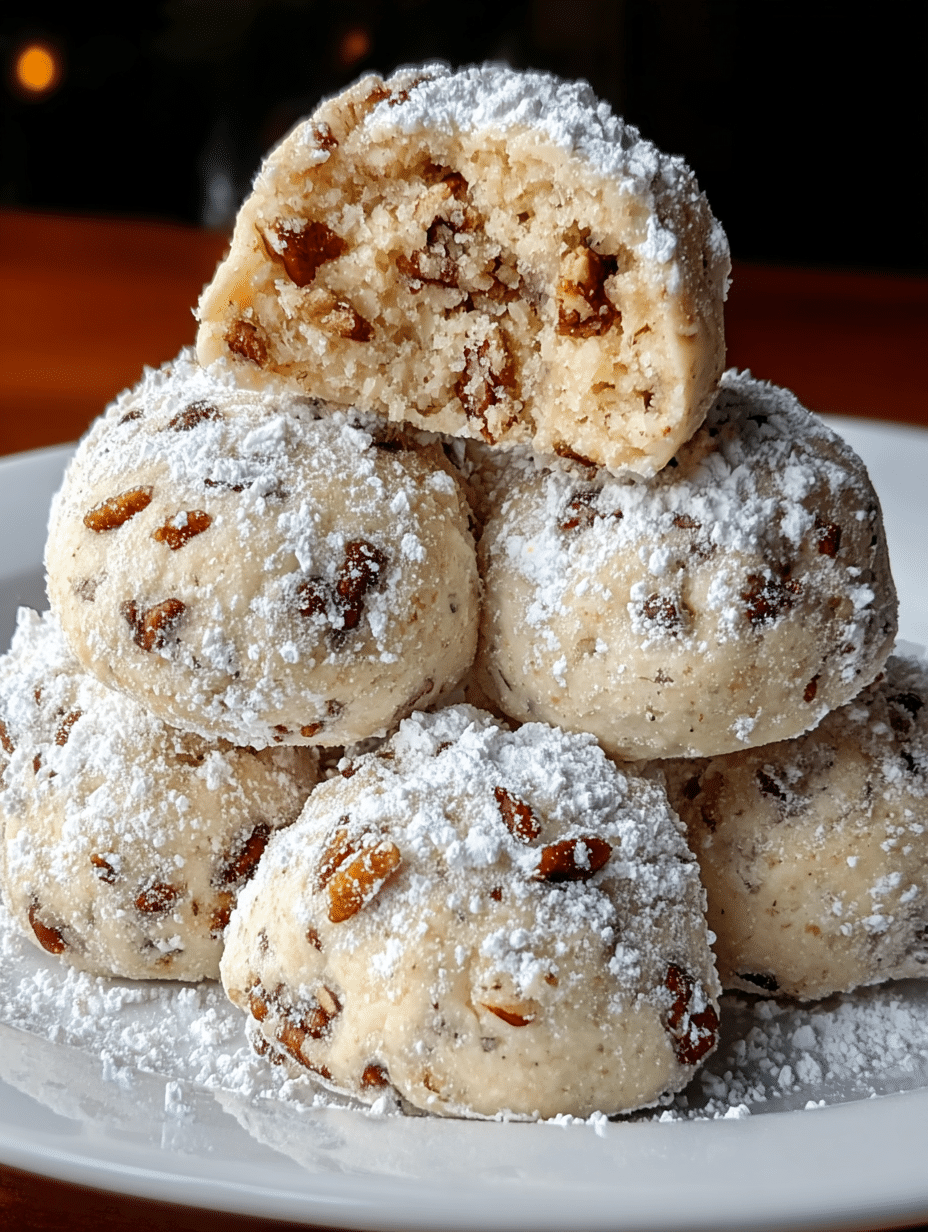
Bake Perfect Buttery Pecan Snowball Cookies: Tips for Tenderness
Imagine a cookie that melts in your mouth, leaving behind a rich, buttery taste, a hint of toasted pecans, and a sweet cloud of powdered sugar. This is the enchanting experience of biting into a perfect pecan snowball cookie. Often called Mexican Wedding Cakes or Russian Tea Cakes, these delightful morsels are more than just a seasonal treat; they're a timeless classic that evokes warmth, comfort, and cherished memories. While deceptively simple in their appearance, achieving that signature extra-tender texture and balanced flavor requires a few key insights and techniques. Here, we'll delve into the secrets to baking snowball cookies that are not just good, but truly extraordinary – so tender they practically dissolve on your tongue.
Unveiling the Magic of Buttery Pecan Snowball Cookies
What is it about buttery pecan snowball cookies that makes them so universally adored? It's a harmonious blend of simplicity and indulgence. At their heart, these cookies are a celebration of butter, finely chopped pecans, and a generous dusting of powdered sugar. Each bite offers a delightful textural contrast: a crumbly, soft interior gives way to the subtle crunch of the nuts, all enveloped in that characteristic delicate, snowy coating that sweetly melts away. They are the quintessential holiday cookie, sparkling on any dessert table, and are often the first to disappear.
For many, these cookies carry a nostalgic charm, conjuring images of grandma's sunlit kitchen, dusted with sweet sugar. They're more than just a recipe; they’re a tradition, a way to fill your home with warmth and create new memories. My family even refers to them as our "magic winter cookies" because of how quickly they vanish, leaving everyone wanting more. If you're eager to recapture that nostalgic magic or start your own tradition, diving deeper into their essence can be incredibly rewarding. For a truly classic take, you might enjoy exploring
Grandma's Magic Winter Snowball Cookies: Pecan Perfection, a recipe that truly embodies their timeless appeal.
The Science of Tenderness: Key Ingredients and Techniques
The secret to truly tender snowball cookies lies not just in the ingredients themselves, but in how they are handled. Mastering a few fundamental techniques can elevate your baking from good to absolutely sublime.
Butter: The Heart of the Cookie
Butter is not just a flavor enhancer here; it's a cornerstone of the cookie's tender texture. The key is to use
unsalted butter at room temperature.
*
Room Temperature Butter: Butter that's too cold won't cream properly, leading to a dense cookie. Melted butter, on the other hand, will result in a greasy, flatter cookie. Perfectly softened butter should yield slightly when pressed but still hold its shape. This allows it to incorporate air during creaming, creating a light and tender crumb.
*
Creaming Method: Creaming the butter with sugar (or in this case, a small amount of granulated sugar before rolling in powdered sugar) is crucial. This process aerates the butter, creating tiny pockets that expand in the oven, contributing to that melt-in-your-mouth texture.
Flour Power: The Gluten Factor
Flour provides structure to your cookies, but it can also be the enemy of tenderness if not handled correctly.
*
Don't Overmix: This is perhaps the most critical rule for achieving tender snowball cookies. Overmixing the dough after adding flour develops gluten, leading to a tough, chewy cookie. Mix only until the flour streaks have just disappeared.
*
Measuring Accurately: Use a kitchen scale for precise flour measurement, or spoon flour lightly into a measuring cup and level it off. Scooping directly from the bag can pack too much flour into the cup, resulting in dry cookies. All-purpose flour is typically fine, but some bakers prefer a combination with a touch of cake flour for ultimate tenderness due to its lower protein content.
The Nutty Truth: Pecans for Texture and Flavor
Pecans are the perfect counterpoint to the buttery dough, adding a delicate crunch and a depth of nutty flavor.
*
Finely Chopped: For maximum tenderness and even distribution, pecans should be finely chopped. This ensures they integrate seamlessly into the dough without creating large, disruptive chunks, contributing to a consistently soft bite.
*
Toasting for Flavor: While optional, lightly toasting your pecans before adding them to the dough will significantly enhance their natural flavor. Spread them on a baking sheet and toast in a 350°F (175°C) oven for 5-7 minutes, watching carefully to prevent burning. Let them cool completely before chopping and adding to the dough. This simple step unlocks a more complex, satisfying nutty aroma that truly elevates the cookie. For those who appreciate this delicate crunch, we have an entire article dedicated to
Buttery Pecan Snowball Cookies: A Crunchy, Tender Delight.
Chilling Out: Why Dough Needs a Break
Chilling the dough is a non-negotiable step for truly perfect snowball cookies, benefiting both tenderness and structure.
*
Prevents Spreading: Cold butter in the dough takes longer to melt in the oven, meaning the cookies hold their shape better and don't spread into flat, brittle discs.
*
Enhances Flavor: Chilling allows the flavors in the dough to meld and deepen, resulting in a richer, more nuanced cookie.
*
Improves Texture: A chilled dough is easier to handle and roll, and the rest allows the flour to fully hydrate, contributing to a more tender and uniform crumb. Aim for at least 30 minutes to an hour, or even overnight, for best results.
Mastering the Art of Baking and Finishing
Even with a perfectly prepared dough, the final steps of baking and coating are crucial for achieving snowball cookie perfection.
Shaping for Success
*
Uniform Size: Use a small cookie scoop or roll the dough into 1-inch balls for consistent baking. Uniformity ensures that all cookies bake evenly, preventing some from being overdone while others are still raw in the center.
*
Gentle Handling: Roll the dough balls gently between your palms. Overworking the dough at this stage can also contribute to toughness.
The Golden Rule: Don't Overbake!
This is perhaps the biggest pitfall in baking snowball cookies.
*
Signs of Doneness: Snowball cookies are meant to be pale. They should be just set and appear mostly white with only a hint of light golden brown on the very bottoms. If they turn golden on top, they are likely overbaked.
*
Remove Promptly: Remove the cookies from the oven as soon as they reach this stage. They will continue to set up slightly as they cool on the baking sheet. Overbaking will lead to dry, crumbly, and tough cookies, devoid of their signature tenderness. Typical baking temperatures are around 325-350°F (160-175°C) for 10-15 minutes, depending on your oven and cookie size.
The Snowy Finale: Powdered Sugar Magic
The iconic powdered sugar coating is what gives these cookies their "snowball" name and provides a delightful sweetness.
*
The Two-Roll Method: For the ultimate snowy effect, roll the cookies in powdered sugar twice.
1.
First Roll (Warm): Immediately after removing from the oven and while still warm (but not hot enough to melt completely), gently roll the cookies in powdered sugar. The warmth helps the sugar adhere and creates a thin, slightly translucent base layer.
2.
Second Roll (Cool): Allow the cookies to cool completely on a wire rack. Once fully cooled, roll them a second time in fresh powdered sugar. This creates that thick, opaque, and truly snowy coating that won't disappear and melts sweetly on your tongue.
Troubleshooting Common Snowball Cookie Woes
Even experienced bakers can encounter issues. Here are solutions to common snowball cookie problems:
*
Cookies Spreading Too Much:
*
Solution: Ensure your butter was at the correct room temperature (not too soft or melted). Chill the dough longer, ideally for at least an hour or more. Make sure you're using the correct amount of flour; too little flour can cause excessive spread.
*
Cookies Are Dry or Crumbly:
*
Solution: You likely overbaked them. Reduce baking time and look for only barely golden bottoms. Also, ensure you haven't overmixed the dough after adding the flour, as this develops gluten leading to toughness and dryness. Correct butter and flour ratios are also key; accurate measuring is essential.
*
Powdered Sugar Coating Disappears:
*
Solution: This is almost always solved by the "two-roll" method. Roll once while the cookies are warm, and then again once they are completely cooled. This ensures a thick, stable, and visually appealing snowy coating.
*
Cookies Not Tender Enough:
*
Solution: Revisit your mixing technique (avoid overmixing flour), butter temperature (room temperature is key), and baking time (don't overbake). Chilling the dough also significantly contributes to a tender crumb.
Conclusion
Baking perfect buttery pecan snowball cookies is a delightful journey, one that rewards patience and attention to detail with truly extraordinary results. By understanding the roles of key ingredients like perfectly softened butter and finely chopped pecans, and by mastering techniques such as gentle mixing, adequate chilling, and precise baking, you can achieve that sought-after extra-tender, melt-in-your-mouth texture every time. These timeless treats, with their rich pecan flavor and signature cloud of powdered sugar, are more than just a dessert; they are a comforting classic, ready to fill your kitchen with warmth and create cherished memories. So go ahead, bake a batch, share them with loved ones, and savor the magic of these exquisite cookies.